
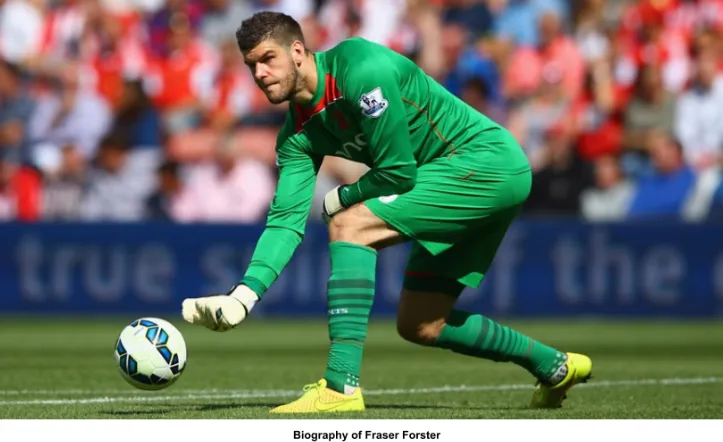
According to Xoilac Fraser Gerard Forster belongs to a rare breed of English goalkeeper: the late bloomer whose career was forged not in the glare of a Premier League academy, but in the wind and noise of Scottish football and the unforgiving lower leagues. Standing at 6 feet 7 inches, he is a physically imposing presence, yet his journey is defined less by sheer size than by patience, reinvention, and an ability to deliver when the spotlight finally arrives. To understand Forster is to compare him—against the peers he competed with, the records he broke, and the expectations that followed him.
A Different Kind of Goalkeeping Education
Forster did not begin as a goalkeeper until he was thirteen. Born in Hexham, Northumberland, he was initially a rugby union and cricket player, and coaches wondered whether he was too small to stand between the posts. That late conversion shaped a different developmental curve. While contemporaries such as Joe Hart entered the Manchester City system early and were groomed for the top, Forster learned his trade through a series of loans: Stockport County, Bristol Rovers, Norwich City, and finally Celtic. Each stop was an education in humility and adaptation. At Norwich, he helped win the League One title; at Celtic, he found a stage that would transform his reputation.
Celtic: The Wall That Toppled Records
The comparison that defines Forster’s Celtic years is not with a rival goalkeeper, but with history itself. During his loan spells and subsequent permanent move to Parkhead, he kept eleven consecutive clean sheets, breaking a Celtic record that had stood since the 1921–22 season. He also set a Scottish top-division record of 1,256 minutes without conceding a goal. These numbers are striking, but their context matters: Scottish football offered limited weekly competition, and critics questioned whether such dominance translated to the elite level. Forster answered that question in the Champions League. Against Barcelona in 2012, he produced a string of saves that drew acclaim from Xavi, who suggested Forster could play for the Spanish champions. In one match at Camp Nou, he made eight saves—the most by a Celtic goalkeeper in a Champions League game since 2003. The comparison here is between domestic comfort and continental proof, and Forster passed the test.
Southampton: Records, Injury, and the Long Road Back
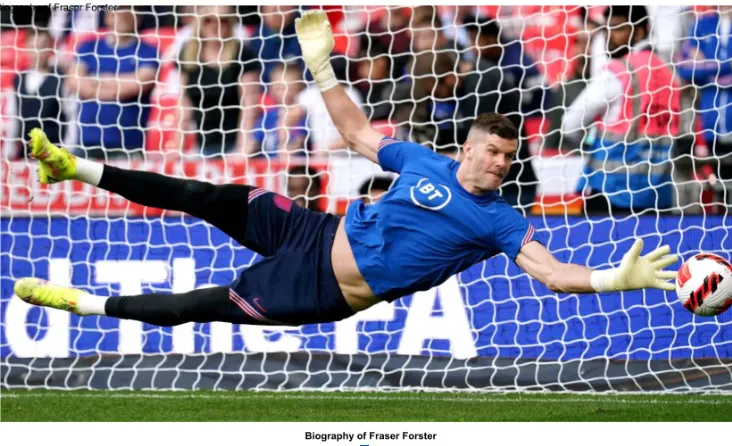
When Forster joined Southampton for around £10 million in 2014, he entered a different kind of comparison: the week-to-week scrutiny of the Premier League. His debut season was impressive, and he set a club record of 14 clean sheets in a single Premier League campaign—a mark that still stands. But in March 2015, a serious knee injury ruled him out for the rest of the year. The goalkeeper who returned in January 2016 was not the same athlete in every respect, but he was arguably a more complete one. He went on a run of six consecutive clean sheets and set a new club record of 708 minutes without conceding. Arsène Wenger called him “brilliant”; Ronald Koeman described him as “one of the best in the Premier League and maybe Europe”. The comparison shifted from potential to resilience: Forster was no longer the tall understudy from Scotland, but a goalkeeper who had rebuilt himself after career-threatening injury.
See more: https://experts-univers.com/lich-thi-dau/
The England Question and the Hart Comparison
Forster’s international career—six caps between 2013 and 2016—invites the most direct comparison: Joe Hart versus Fraser Forster. Hart was England’s undisputed number one, a goalkeeper of high quality but not total consistency. Forster, at 6 feet 7 inches, towered over Hart’s 6 feet 5 inches, and his agility for his size was repeatedly noted. Yet the debate was never truly settled on the pitch. Forster’s Champions League performances suggested he could raise his game against the best, while Hart’s experience at the top level kept him ahead. The comparison is less about who was better than about timing: Forster’s peak coincided with Hart’s established tenure, and the six-cap total reflects opportunity as much as ability. A late recall to the England squad in 2022, six years after his last cap, offered a final glimpse of what might have been.
A Legacy Measured in Records, Not Applause
Forster’s later years took him to Tottenham Hotspur as a backup, where he added a Europa League winner’s medal to his collection, and then to Bournemouth. The comparison with his younger self is perhaps the most revealing. The goalkeeper who once relied on size and reflex became a calm, experienced presence, valued less for spectacular saves than for stability. He never became England’s long-term number one, and he never played for a club in the traditional “big four” at its peak. But he holds records at Celtic and Southampton that endure, and he proved that a career can be built without a linear path.
Conclusion: The Goalkeeper Who Waited
Fraser Forster’s story is a comparison between patience and noise, between the slow accumulation of proof and the instant judgments of the football world. He was never the most celebrated goalkeeper of his generation, but he was among the most durable. From the late conversion at thirteen to the record-breaking wall at Celtic, from the injury that could have ended everything to the six clean sheets that announced his return, Forster’s biography is a reminder that goalkeeping is not only about the saves one makes, but about the years one endures. At 38, with a career spanning two decades, he stands as a quiet testament to the value of a different kind of path.

I am Amelia 35-year-old expert blogger and SEO specialist with a passion for crafting engaging, high-quality content. With years of experience in digital marketing and writing, I blend creativity with strategy to help websites grow. My work reflects insight, authenticity, and a love for connecting ideas through words.


