
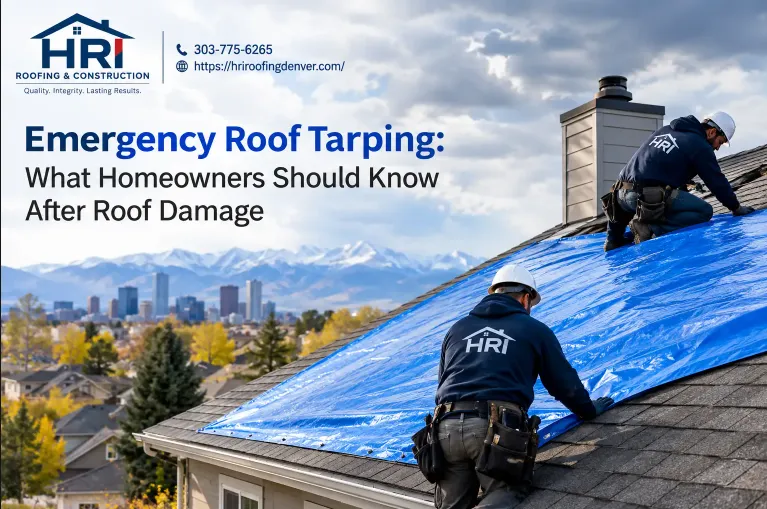
A severe storm can leave a roof vulnerable in a matter of minutes. High winds may tear away shingles, hail can damage roofing materials, and a fallen tree limb can create an opening that exposes the home to rain and snow. Even when the damage appears limited to one section of the roof, water can enter the attic, insulation, ceilings, and walls if the exposed area is not protected.
For Denver homeowners, emergency roof tarping can provide temporary protection while the damaged roof is assessed and permanent repairs are arranged. It is not a substitute for repairing the roof, but it can help limit additional exposure to the weather when installed appropriately. Understanding when tarping is needed, what the process involves, and what should happen afterward can help homeowners make better decisions during an already stressful situation.
What Is Emergency Roof Tarping?
Emergency roof tarping is a temporary protective measure used when roofing materials have been damaged or an opening leaves part of the structure exposed. A qualified roofing professional assesses the affected area and determines whether a tarp or another temporary covering is appropriate for the conditions.
The purpose is to reduce the amount of rain, snow, and other weather entering through the damaged section while the property owner arranges a more complete assessment and repair. It can be useful after wind damage, hailstorms, fallen branches, or other events that compromise the roof’s protective surface.
How Professional Roof Tarping Provides Temporary Protection
A professional evaluates the condition of the roof, the extent of the opening, the surrounding materials, and whether the area can be accessed safely. The temporary covering must be suitable for the damaged section and installed in a way that accounts for drainage and weather exposure.
A tarp cannot restore damaged shingles, replace compromised underlayment, or repair structural components. Its role is to provide temporary protection until the roof can be properly repaired.
Why a Tarp Is Not a Permanent Roof Repair
Even a well-installed tarp has limitations. Wind can affect its condition, prolonged weather exposure can cause deterioration, and hidden damage may remain beneath the covering. The roof may also have problems beyond the area that initially appeared damaged.
For these reasons, emergency tarping should be treated as an interim step. Once the immediate risk has been addressed, the roof still needs an appropriate inspection and a plan for permanent repairs.
When Does a Roof Need Emergency Tarping?
Not every damaged roof requires the same response. The need for temporary protection depends on whether the roof has an exposed opening, whether water is entering the home, and how much of the roofing system has been affected.
Hail and Wind Damage
Denver homeowners are familiar with changing weather conditions, including hail and strong winds. A storm may leave shingles missing, lift roofing materials, or damage a section of the roof that was already weakened by age or previous repairs.
If the damage exposes the underlying roof structure or allows water to enter, professional temporary protection may be appropriate. Damage that is not obvious from the ground may still require an inspection before the next storm.
Fallen Tree Limbs and Sudden Roof Openings
A tree limb or other falling object can damage shingles, roof decking, and potentially the structure beneath them. In these situations, the visible opening may not reveal the full extent of the damage.
A professional should assess whether the affected area is structurally safe before attempting temporary protection. If there is significant structural damage or a risk of collapse, people should stay away from the affected area and seek appropriate emergency assistance.
Active Water Intrusion After Heavy Rain
Water entering the home during rainfall is another reason to seek prompt professional help. The source may be a newly exposed section of roofing or damage around an existing roof component.
The location where water appears inside does not necessarily identify the entry point. Water can travel along roofing materials and framing before reaching a ceiling or wall. The priority is to address the immediate risk and determine what protection and repairs are needed.
What Should Homeowners Do Immediately After Roof Damage?
The first priority after roof damage is safety, followed by preventing additional exposure and documenting the visible condition of the property when it is safe to do so.
Keep People Away From Unsafe Areas
Avoid climbing onto the roof or walking on damaged roofing materials. Wet, icy, or structurally weakened surfaces can be dangerous, and damage beneath shingles may not be visible. Do not attempt to install a tarp during a storm.
If water is entering near electrical equipment or a ceiling appears unstable, keep away from the affected area and seek qualified assistance. Serious structural damage may require emergency services.
Document Visible Damage When It Is Safe
Photographs of visible roof damage, fallen branches, and interior water stains can help establish what happened. Take pictures from a safe location without climbing ladders or entering areas where overhead damage could create a hazard.
Keep records of the date, the weather event if known, and any emergency work performed. If you plan to contact your insurer, this information may help with the documentation process.
Contact a Qualified Roofing Professional
A roofing professional can assess the damage, determine whether temporary protection is appropriate, and explain the next steps. If the roof is actively exposed to the weather, communicate that clearly when requesting assistance.
A prompt assessment is particularly important when rain is forecast or the damaged area is large. Waiting for the next storm to reveal the extent of the problem can allow additional moisture to enter the property.
How Does Professional Emergency Roof Tarping Work?
The process varies with the type and extent of damage, but it generally begins with an assessment rather than immediately covering every visible problem.
Initial Safety Assessment
The professional evaluates whether the roof and surrounding area can be accessed safely. Severe structural damage, unstable debris, electrical hazards, and dangerous weather conditions may affect what can be done and when.
Evaluating the Damaged Area
The damaged section is assessed to determine the likely opening, the condition of nearby roofing materials, and the appropriate temporary protection. Where possible and safe, documenting the original condition before covering it can also help preserve useful records.
Installing Temporary Protection
If tarping is suitable, the professional installs an appropriate temporary covering designed to protect the exposed area. The installation needs to account for the roof’s condition, drainage, and weather exposure.
A tarp that is poorly secured or unsuitable for the conditions may fail to provide reliable protection. This is one reason professional assessment matters, particularly on steep roofs or after significant structural damage.
Documenting Damage Before Permanent Repairs
Photographs, written observations, and records of temporary work can help homeowners understand the scope of the problem. They may also be useful if an insurance claim is being considered, although documentation does not guarantee coverage or reimbursement.
How Does Denver Weather Affect Emergency Roof Tarping?
Denver’s weather can change quickly, and a temporary covering must be appropriate for the conditions in which it will be used. Wind can place stress on exposed materials, while rain and melting snow can reveal weaknesses in the temporary protection or the surrounding roof.
Hail may damage a broader area than the most obvious impact point suggests. Snow and changing temperatures can also complicate access and repair scheduling, especially when the roof is wet or icy.
Because conditions vary, homeowners should not assume that a tarp will remain effective indefinitely. If the covering appears displaced or water continues entering the home, contact the service provider for reassessment rather than attempting to adjust it from the roof.
How Long Can a Roof Stay Tarped?
There is no single timeframe that applies to every tarped roof. The duration depends on the condition of the covering, the severity of the original damage, the weather, and how quickly permanent repairs can be completed.
A temporary covering should not be treated as a long-term solution simply because it appears intact. Conditions can change, and the damaged roof beneath it still requires attention.
Homeowners should ask the contractor how the temporary protection will be monitored, what signs would indicate a problem, and when the permanent repair can be evaluated. If weather conditions or scheduling delays affect the timeline, the temporary protection may need to be reassessed. Planning long-term solutions requires understanding how comprehensive roofing assistance works beyond initial stabilization. Property owners evaluating full replacement options or specialized maintenance often review professional qualifications to learn about the services available for structural restoration. Proper planning ensures that temporary measures transition smoothly into permanent, durable repairs that maintain overall building safety.
Does Homeowners Insurance Cover Emergency Roof Tarping?
Insurance coverage depends on the policy, the cause of the damage, applicable exclusions, and the circumstances of the loss. Some policies may cover reasonable emergency measures intended to prevent further damage, but homeowners should not assume that every tarping expense will be reimbursed.
Review your policy and contact your insurer to understand the requirements that apply to your situation. Keep copies of the contractor’s estimate, invoices, photographs, and other relevant records. If immediate protection is needed, explain the urgency and ask how to document the work appropriately.
Emergency tarping and permanent roof repair are separate parts of the process. The insurer may evaluate the original damage and the subsequent repair costs under the terms of the policy. A roofing contractor can provide information about the roof’s condition and the work performed, but coverage decisions remain subject to the policy and insurer’s review.
What Happens After Emergency Roof Tarping?
Once the roof has temporary protection, the next step is to determine the full extent of the damage and plan the permanent repair.
Inspecting the Roof for Hidden Damage
The initial opening may be only one part of the problem. A more complete assessment may identify damaged shingles, underlayment, flashing, decking, or other components that need attention.
Interior areas may also need evaluation if water has entered the attic, insulation, ceilings, or walls. The required work depends on the duration and extent of moisture exposure.
Planning Permanent Roof Repairs
The permanent repair should address the cause of the damage rather than simply replace the temporary covering. Depending on the findings, the work might involve replacing damaged shingles, repairing flashing, addressing compromised decking, or correcting other roofing defects.
Homeowners should request a written explanation of the recommended work, the materials involved, and any additional damage discovered during the repair.
For property owners who need help evaluating the next step, HRI Roofing & Construction LLC provides information about its Denver roof repair services. The appropriate repair will depend on the roof’s actual condition and the results of a professional assessment.
Deciding Whether Additional Repairs Are Needed
Storm damage can affect more than one roof component. The inspection should consider the surrounding roofing system rather than focusing exclusively on the area that was tarped.
A clear repair plan helps homeowners understand which problems need immediate attention, which work can be scheduled, and whether any additional assessment is appropriate.
How Can Homeowners Prepare for Future Roof Emergencies?
Although not every storm-related problem can be prevented, routine attention to roof condition can help homeowners identify potential weaknesses before an emergency occurs.
Regular professional inspections can identify deteriorating roofing materials, damaged flashing, and other conditions that may need repair. After significant weather, homeowners can look for visible changes from the ground and arrange an inspection when damage is suspected.
It is also useful to keep records of roof repairs and maintenance. Knowing what work was previously completed can help a contractor assess recurring problems and determine whether a new issue is connected to an older repair.
For Denver property owners, preparation means knowing whom to contact, understanding the limits of temporary protection, and having a plan for moving from emergency stabilization to permanent repairs.
Final Thoughts
Emergency roof tarping can be an important first step when storm damage leaves a roof exposed. It provides temporary protection while the property owner arranges an assessment and plans the work needed to restore the roof.
The important distinction is that a tarp buys time; it does not resolve every underlying roofing problem. Safety, appropriate documentation, professional assessment, and a clear permanent repair plan all contribute to a more responsible response after roof damage.
Homeowners looking for information about roofing, storm restoration, and related exterior services can learn more about HRI Roofing & Construction LLC. Whatever contractor you choose, the priority should be to protect the property safely, understand the extent of the damage, and address the underlying problem rather than relying on temporary coverage indefinitely.
Frequently Asked Questions
What is emergency roof tarping?
Emergency roof tarping is a temporary protective measure used when roof damage leaves an area exposed to rain, snow, or other weather. It helps limit further exposure until the roof can be properly assessed and repaired.
When should a damaged roof be tarped?
Tarping may be appropriate when storm damage creates an opening or leaves roofing materials exposed. A qualified professional should assess the damage and determine whether temporary protection is suitable and safe.
How long can a roof stay tarped?
There is no universal timeframe. The duration depends on the covering’s condition, the damage, weather exposure, and the time needed to arrange permanent repairs. The roof should be reassessed if the covering deteriorates or water continues entering.
Can roof tarping prevent further water damage?
Properly installed temporary protection can help reduce additional water intrusion through an exposed area. However, it cannot guarantee that all water will be kept out, particularly if there is hidden damage or the covering is affected by severe weather.
Does homeowners insurance cover emergency roof tarping?
Coverage depends on the policy and the circumstances of the damage. Homeowners should review their policy, contact their insurer, and keep records of emergency work and related expenses.
What happens after a roof is tarped?
The next steps generally include a more complete roof assessment, documentation of the damage, and a plan for permanent repairs. Additional interior or structural evaluation may be needed if water or impact damage has affected other parts of the property.
Who should I call for emergency roof tarping in Denver?
Contact a qualified roofing or emergency property-protection professional who can assess the situation, determine whether temporary protection is appropriate, and explain the next steps toward permanent repair. If the property has significant structural damage or another immediate safety hazard, keep people away from the affected area and seek appropriate emergency assistance.

I am Amelia 35-year-old expert blogger and SEO specialist with a passion for crafting engaging, high-quality content. With years of experience in digital marketing and writing, I blend creativity with strategy to help websites grow. My work reflects insight, authenticity, and a love for connecting ideas through words.


