Texting moves fast, and sometimes the words we use carry more emotion than we expect. When you first see a phrase like “I’m happy ASF” or “That movie was good ASF,” it can feel confusing or even a little surprising. That’s exactly why understanding ASF Meaning in Text matters in 2026—because language keeps evolving, and so does the way we express our feelings online.
This guide breaks everything down in the simplest way possible. You’ll learn what ASF really means, when you should use it, when to avoid it, and how to replace it with cleaner, more expressive alternatives. Whether you’re chatting with friends, posting on social media, or exploring modern slang, this article helps you understand ASF Meaning in Text with clarity, confidence, and zero confusion.
What Does ASF Mean in Text? Full Definition Explained
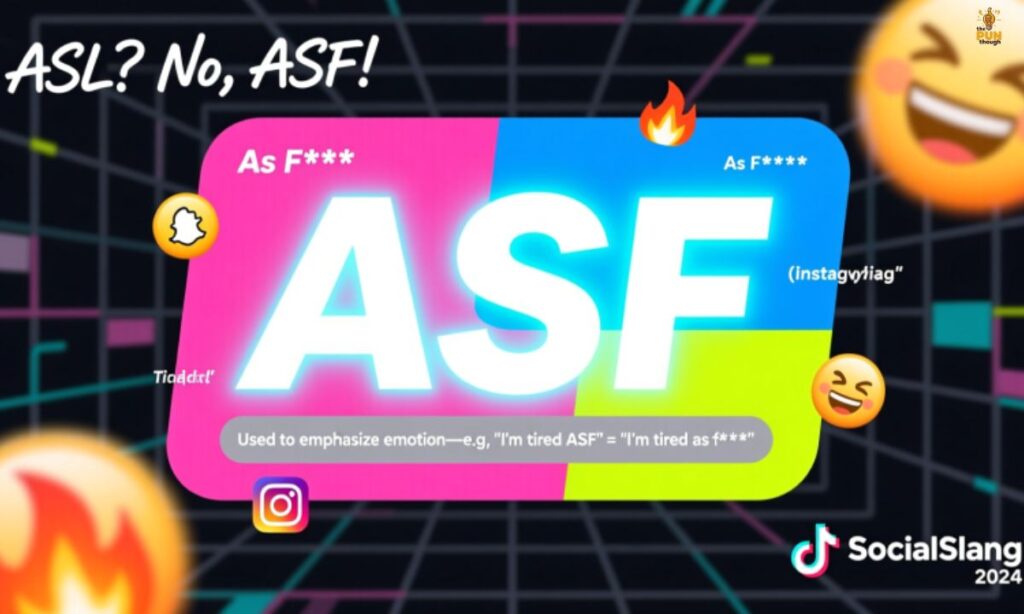
ASF stands for “As F*”**—and yes, that’s exactly what you think it is. It’s a slang intensifier used to emphasize just how extreme something is. Think of it as the digital equivalent of saying “extremely,” “so,” or “really”—but with a lot more punch.
When someone says they’re “hungry ASF,” they’re not just a little peckish. They’re starving. When they say a movie was “boring ASF,” they mean it was painfully dull. The ASF meaning in text is all about amplifying emotions, reactions, or descriptions to their absolute maximum.
Here’s the breakdown:
- AS = As
- F = The F-word (a common expletive)
Combined, it creates a powerful emphasis that makes any statement hit harder. It’s raw, it’s honest, and it’s unapologetically expressive. That’s why ASF has become so popular in casual digital communication—it captures intensity in just three letters.
But while ASF is widely understood among younger generations, it’s important to know when and where it’s appropriate to use. Because let’s be real: not every conversation calls for this level of intensity.
Origin of ASF and How It Became Popular in Texting
The ASF meaning didn’t just appear overnight. It evolved from internet culture, where abbreviations and slang have always thrived. The phrase “as f***” has been part of spoken language for decades, used to emphasize emotions or situations. But when texting and social media exploded, people needed faster ways to express themselves.

Enter: ASF.
By the early 2010s, texting acronyms were everywhere—LOL, BRB, SMH, and countless others. ASF followed naturally as a way to condense “as f***” into something quick and shareable. It gained serious traction on platforms like Twitter, Instagram, and Snapchat, where character limits and fast-paced conversations made brevity essential.
Then came TikTok. And with TikTok came Gen Z’s absolute dominance of slang culture. ASF exploded across videos, comments, and captions. It became the go-to way to express extreme feelings—whether someone was happy ASF, stressed ASF, or confused ASF.
Today, ASF is a staple of modern texting language. It’s evolved beyond just a substitute for profanity—it’s become a cultural marker of how we communicate emotion in the digital age. And in 2026, it’s showing no signs of slowing down.
How ASF Is Used in Real Messages (With Examples)
Understanding the ASF text slang is one thing. Seeing it in action? That’s when it clicks. ASF works as an intensifier that comes after an adjective, emotion, or state of being. It amplifies whatever word comes before it.
Here are some real-world examples:
Example 1:
“I’m tired ASF. Can’t wait to sleep.”
Translation: I’m extremely tired.
Example 2:
“This song is catchy ASF 🔥”
Translation: This song is incredibly catchy.
Example 3:
“She was mad ASF when she found out.”
Translation: She was furious.
Example 4:
“That test was hard ASF 😭”
Translation: That test was extremely difficult.
Example 5:
“I’m excited ASF for the concert!”
Translation: I’m so excited.
Notice how ASF always comes at the end of the statement? That’s its signature placement. It doesn’t work at the beginning or middle of a sentence—it’s the final punch that drives the emotion home.
Common Texting Situations Where ASF Appears
1. Venting to Friends
When you’re frustrated, exhausted, or overwhelmed, ASF becomes your emotional release. “Work was stressful ASF today” lets your friends know you’re not just a little stressed—you’re at your limit.
2. Expressing Excitement
ASF isn’t always negative. When something amazing happens, ASF amplifies your joy. “I’m hyped ASF for this weekend!” shows genuine enthusiasm.
3. Describing Extreme Situations
Whether something is funny, scary, or awkward, ASF adds intensity. “That movie was scary ASF” tells people it wasn’t just mildly frightening—it was terrifying.
4. Social Media Captions
On Instagram, TikTok, and Snapchat, ASF appears in captions to make statements more relatable and engaging. “Monday mornings hit different ASF 😴” resonates because everyone feels that intensity.
5. Group Chats
In casual group conversations, ASF helps you match the energy of the chat. When everyone’s being expressive and unfiltered, ASF fits right in.
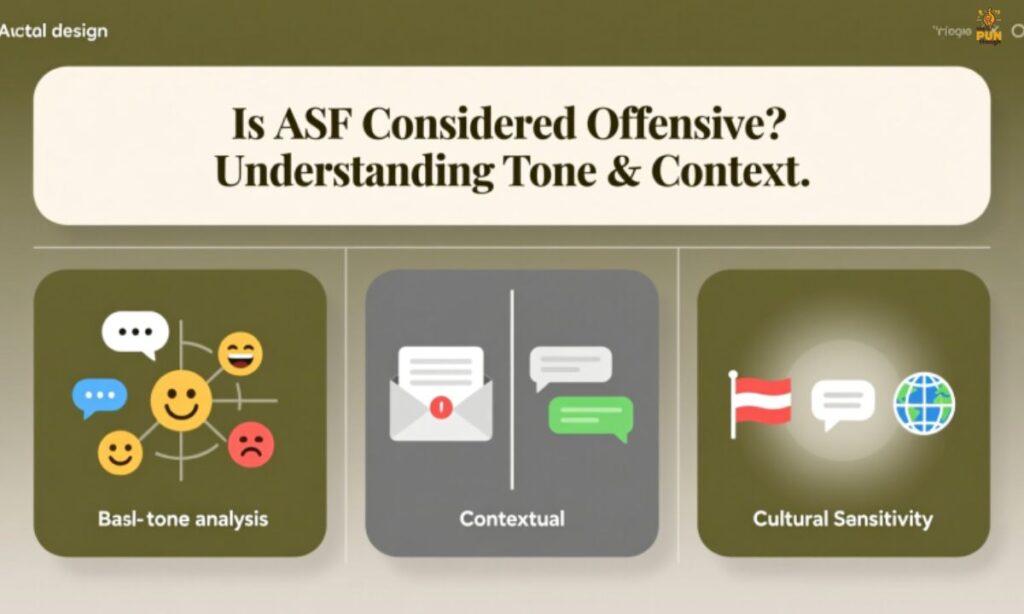
Is ASF Considered Offensive? Understanding Tone & Context
When ASF Might Be Offensive:
- In formal conversations (emails, work chats, professional settings)
- When talking to elders, teachers, or authority figures
- In family group chats where language boundaries exist
- In public comments where diverse audiences might see it
When ASF Is Generally Acceptable:
- In private texts with close friends who use similar language
- In casual social media spaces where slang is the norm
- Among peers who share the same communication style
- In group chats where everyone uses informal language
The difference comes down to respect and awareness. ASF is a casual slang term rooted in profanity. While it’s normalized in certain circles, not everyone is comfortable with that language. Reading the room—or in this case, the chat—is crucial.
Where You Should and Shouldn’t Use ASF
✅ Where ASF Works:
- Private texts with friends
- Casual social media posts on your personal accounts
- Group chats with peers
- Comments on memes or relatable content
- Conversations where everyone uses similar slang
❌ Where ASF Doesn’t Work:
- Professional emails or work messages
- School assignments or academic writing
- Conversations with teachers, bosses, or supervisors
- Family chats with parents or grandparents (unless they’re cool with it)
- Public-facing content representing you professionally
- First impressions with new people
Using ASF in the wrong context doesn’t just risk offending someone—it can also make you seem unprofessional or unaware of social boundaries. And in 2026, digital communication skills matter more than ever.
ASF Meaning on TikTok, Instagram, Snapchat & Social Media
Social media is where ASF meaning in chat truly comes alive. Each platform has its own culture, but ASF fits seamlessly across all of them.
TikTok:
On TikTok, ASF appears in captions, comments, and voiceovers. Creators use it to emphasize relatable moments: “When your alarm goes off and you’re tired ASF 😭” or “This trend is addictive ASF.” It adds personality and authenticity to content.
Instagram:
Instagram captions and stories frequently feature ASF. Whether it’s a selfie (“Feeling cute ASF today ✨”) or a mood post (“Stressed ASF but we move”), ASF makes captions feel more genuine and conversational.
Snapchat:
Snapchat’s casual, ephemeral nature makes it perfect for ASF. Friends send snaps saying “This party is lit ASF 🎉” or “I’m bored ASF, hmu.” It’s quick, expressive, and fits the platform’s vibe.
Twitter (X):
Twitter users love ASF for tweets that need extra emphasis. “Coffee is necessary ASF on Mondays ☕️” or “That plot twist was unexpected ASF” gets more engagement because it’s relatable and intense.
Polite and Professional Alternatives to ASF
Professional Alternatives:
- “Extremely”
- “Very”
- “Incredibly”
- “Exceptionally”
- “Remarkably”
Examples:
- Instead of “I’m tired ASF” → “I’m extremely tired”
- Instead of “This is hard ASF” → “This is incredibly difficult”
- Instead of “She was mad ASF” → “She was very upset”
Semi-Casual Alternatives:
- “So”
- “Really”
- “Super”
- “Pretty” (as in “pretty tired”)
Examples:
- “I’m so hungry right now”
- “That was really funny”
- “This class is super boring”
These alternatives maintain the emphasis without crossing any professional or social boundaries. They’re perfect for work emails, school projects, family conversations, or any situation where you want to be taken seriously.
Casual Slang Alternatives With the Same Intensity
Popular Alternatives:
1. “Mad” (East Coast slang)
“I’m mad tired” = I’m very tired
“That’s mad cool” = That’s really cool
2. “Hella” (West Coast slang)
“I’m hella hungry” = I’m very hungry
“That’s hella expensive” = That’s extremely expensive
3. “Lowkey” / “Highkey”
“I’m lowkey stressed” = I’m somewhat stressed
“I’m highly excited” = I’m very excited
4. “Deadass” (NYC slang)
“I’m deadass tired” = I’m seriously tired
Often used for emphasis on truthfulness
5. “Fr” / “For real”
“I’m tired fr” = I’m genuinely tired
Emphasizes honesty
6. “No cap”
“That was scary no cap” = That was genuinely scary
Confirms you’re not exaggerating
7. “On God” (often shortened to “ONG”)
“I’m hungry on God” = I’m seriously hungry
Swears to the truth of a statement
These alternatives let you keep the casual, expressive vibe of ASF while varying your language. Plus, they’re region-specific and culturally rich, adding flavor to your texting style.
ASF vs AF: What’s the Difference?
You’ve probably seen both ASF and AF floating around. They’re similar but not identical. Understanding the difference helps you choose the right one for your message.
AF = “As F***”
Same core meaning as ASF, just one letter shorter. AF is slightly more common and has been around longer. It’s the original abbreviated form.
ASF = “As F***”
Essentially the same as AF, but some people prefer ASF because it mirrors how “as f***” sounds when spoken aloud. The extra “S” makes it feel more complete.
Key Differences:
- Length: AF is shorter (2 letters), ASF is longer (3 letters)
- Popularity: AF is more widely recognized, ASF is gaining ground
- Usage: Both are interchangeable in most contexts
- Preference: Some people just like how one looks or sounds better
Examples:
- “I’m tired AF” = “I’m tired ASF”
- “This is cool AF” = “This is cool ASF”
- “She’s smart AF” = “She’s smart ASF”
The truth? There’s no functional difference. It’s like choosing between “gonna” and “going to”—both get the message across. Use whichever feels more natural to you or matches the style of the person you’re texting.
In 2026, both AF and ASF are thriving. Don’t overthink it—just pick one and roll with it.
How to Choose the Right ASF Alternative Based on Tone
Choosing the right alternative to ASF isn’t just about avoiding profanity—it’s about matching your tone to your audience and situation. Here’s how to navigate different scenarios:
For Professional Settings (Work, School, Formal):
Use: “Extremely,” “Very,” “Incredibly,” “Exceptionally”
Why: These words are universally appropriate and maintain professionalism without sacrificing emphasis.
For Family Conversations (Parents, Relatives):
Use: “So,” “Really,” “Super,” “Pretty”
Why: These are warm, familiar, and show respect for generational boundaries while still expressing yourself.
For Friends (Casual, Personal):
Use: ASF, AF, “Mad,” “Hella,” “Lowkey/Highkey”
Why: These match the informal, expressive energy of friend conversations. No need to hold back here.
For Social Media (Public Posts):
Use: Depends on your brand—ASF for casual authenticity, “So” or “Really” for broader appeal
Why: Consider who follows you and what image you want to project.
Real-Life ASF Text Examples
Sometimes the best way to understand ASF is through real conversations. Here are authentic texting scenarios showing ASF in action—and how to adapt them for different audiences.
Scenario 1: Venting to a Friend
With ASF: “Today was stressful ASF. Boss kept piling on work 😤”
Without ASF: “Today was extremely stressful. My boss kept adding more work.”
Scenario 2: Expressing Excitement
With ASF: “I’m hyped ASF for the concert tomorrow! 🎸”
Without ASF: “I’m so excited for the concert tomorrow!”
Scenario 3: Describing Food
With ASF: “This pizza is good ASF 🍕”
Without ASF: “This pizza is really good.”
Scenario 4: Talking About the Weather
With ASF: “It’s cold ASF outside, bring a jacket”
Without ASF: “It’s freezing outside, bring a jacket.”
Scenario 5: Reacting to Content
With ASF: “That video was funny ASF 😂😂”
Without ASF: “That video was hilarious.”
Scenario 6: Monday Mood
With ASF: “Mondays are rough ASF”
Without ASF: “Mondays are really tough.”
Similar Slang Terms You Should Know in 2026
If you’re keeping up with ASF, you should know these related slang terms that dominate modern texting. They’re all about emphasis, emotion, and authentic expression.
1. FR (For Real)
Emphasizes truth or agreement
“I’m tired fr” = I’m genuinely tired
2. ONG (On God)
Swears to honesty
“That was scary ong” = That was truly scary
3. NGL (Not Gonna Lie)
Introduces an honest admission
“Ngl, I’m kinda nervous” = Honestly, I’m nervous
4. IMO/IMHO (In My Opinion / In My Humble Opinion)
Prefaces personal views
“IMO, that movie was overrated” = In my opinion, that movie was overrated
5. SMH (Shaking My Head)
Expresses disappointment or disbelief
“He forgot again smh” = He forgot again (disapprovingly)
6. WYD (What You Doing)
Casual check-in
“Wyd tonight?” = What are you doing tonight?
7. WTV (Whatever)
Shows indifference
“Wtv, I don’t care” = Whatever, I don’t care
These terms work together to create the rich, expressive language of modern texting. Learning them helps you understand and participate in digital conversations more naturally.
Why ASF Became a Popular Gen Z Slang Term
Gen Z didn’t just adopt ASF—they made it a cultural phenomenon. But why? What makes this particular acronym so appealing to younger generations?
1. Efficiency Meets Emotion
Gen Z grew up texting. They value speed without sacrificing emotional depth. ASF delivers both: three letters that carry intense feelings.
2. Authenticity Over Perfection
Gen Z prizes realness. They’re less formal than previous generations and more comfortable with unfiltered expressions. ASF embodies that raw honesty.
3. Visual Communication
In a world of memes, TikToks, and Instagram stories, text needs to match visual energy. ASF adds punch to captions that need to hit hard and fast.
4. Rebellion Through Language
Every generation creates its own language to distinguish itself. ASF (with its profanity root) represents linguistic rebellion—a way to claim ownership over how they communicate.
5. Social Media Amplification
Platforms like TikTok and Twitter thrive on relatable, shareable content. ASF makes statements more engaging and algorithmically favorable because it triggers emotional responses.
Is ASF Safe to Use in School or Work?
Short answer: No. Long answer: It depends on the specific context, but generally, ASF should stay out of professional and academic settings.
Why ASF Doesn’t Belong in School:
- Academic writing requires formal language
- Teachers and administrators may find it disrespectful
- It can hurt your grades or reputation
- School emails and assignments need professionalism
Why ASF Doesn’t Belong at Work:
- Professional communication has standards
- It can damage your credibility
- Colleagues or supervisors might be offended
- It’s inappropriate for emails, presentations, or meetings
Exception Scenarios:
- Casual group chats with work friends (outside official channels)
- Private texts with school peers (not in class or assignments)
- Creative industries where informal language is part of the culture
In 2026, digital literacy includes knowing when to code-switch—adjusting your language based on context. ASF has its place, but that place isn’t everywhere.
How ASF Changes the Tone of a Sentence
Adding ASF to a sentence does more than emphasize—it completely transforms the tone. Understanding this helps you use it strategically.
Without ASF:
“I’m tired.”
Tone: Neutral, simple statement
With ASF:
“I’m tired ASF.”
Tone: Exhausted, emotional, desperate for sympathy
Without ASF:
“That movie was good.”
Tone: Mild approval, polite
With ASF:
“That movie was good ASF.”
Tone: Enthusiastic, highly impressed, strongly recommending
Without ASF:
“This class is boring.”
Tone: Matter-of-fact, mild complaint
With ASF:
“This class is boring ASF.”
Tone: Frustrated, suffering, seeking validation
See the pattern? ASF intensifies not just the meaning but the emotional weight. It turns observations into experiences, statements into feelings, descriptions into declarations.
Frequently Asked Questions
What does ASF actually mean in texting?
ASF means “as f***” and it shows strong emotion or intensity in casual messages.
Is ASF okay to use in everyday texting?
Yes, it’s fine with close friends or people who understand slang well.
Should I use ASF in professional messages?
No, avoid it in work chats, emails, or formal situations because it sounds vulgar.
Does ASF mean the same thing on TikTok and Instagram?
Yes, the slang meaning stays the same on most social media platforms.
Why do people use ASF instead of saying ‘very’?
People use it to make their feelings sound stronger and more expressive.
Is ASF considered offensive?
It can be for some people, so always think about your audience first.
What are polite alternatives to ASF?
Words like “extremely,” “super,” “totally,” and “absolutely” work well.
Is ASF popular with Gen Z?
Yes, it’s widely used because it feels quick, dramatic, and fun.
Can ASF be used in captions or comments?
Yes, but only if the tone is casual and your audience understands slang.
What should I do if I’m unsure about using ASF?
Choose a safer alternative. It keeps your message clear and respectful.
Conclusion
Understanding ASF Meaning in Text helps you communicate with more confidence and clarity in a world where online language keeps changing. Slang can feel playful and expressive, but it can also create misunderstandings if we don’t use it in the right place or with the right audience. That’s why knowing how ASF works in real conversations matters, especially when you want your messages to feel natural and honest.
By learning the real ASF Meaning in Text, you gain the freedom to choose your tone—bold, casual, polite, or professional. You can express your feelings in a way that fits every moment, whether you’re joking with friends or writing something more thoughtful. When you understand the meaning, the tone, and the alternatives, you communicate with heart, respect, and intention. And that’s what makes your words truly meaningful in 2026.

I am Amelia 35-year-old expert blogger and SEO specialist with a passion for crafting engaging, high-quality content. With years of experience in digital marketing and writing, I blend creativity with strategy to help websites grow. My work reflects insight, authenticity, and a love for connecting ideas through words.