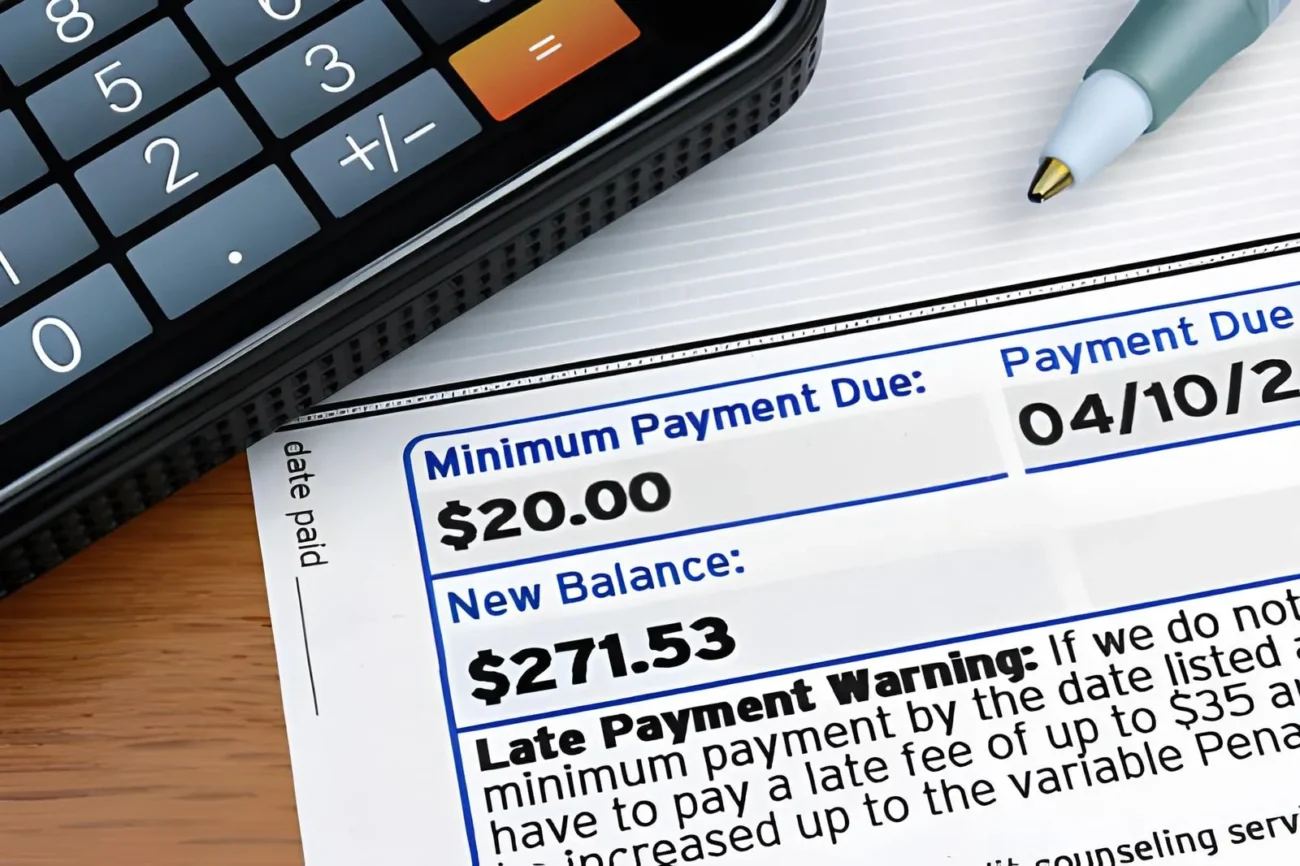
The minimum payment on a credit card can look like a safety valve. It keeps the account current, avoids an immediate late fee, and creates the feeling that the situation is under control. That is exactly why it can be misleading. The number is designed to represent the smallest amount required to stay in good standing, not the amount that meaningfully reduces debt.
That difference matters most when cash is tight. If you are relying on minimum payments month after month, it may be time to look at the bigger picture and consider options for debt relief help instead of treating the statement amount like a long term plan.
What makes the minimum payment so tricky is that it answers the lender’s question, not yours. The lender needs to know the least you must send to avoid default this month. You need to know how long repayment will take, how much interest will pile up, and whether the balance is actually shrinking at a useful pace. Those are not the same question.
Why the number feels more helpful than it is
A minimum payment is framed as progress because it is a payment. Psychologically, that feels responsible. But in many cases, a large share of that amount goes toward interest and only a small part goes toward principal. When that happens, your balance can linger far longer than most people expect.
Federal rules require credit card statements to warn consumers that paying only the minimum increases both interest costs and payoff time. Statements also generally must show how much would need to be paid each month to eliminate the current balance in about three years, which gives a useful comparison point between the minimum and a faster repayment path. See the CFPB rules on periodic statement repayment disclosures for how those notices work.
That comparison box is easy to overlook, but it reveals the real issue. The minimum is usually a survival number, not a strategy number. It tells you what prevents immediate trouble. It does not tell you what solves the debt.
The hidden cost is not just interest
Most people understand that minimum payments lead to more interest. The less obvious problem is how they distort decision making. Once a card payment is reduced to a manageable looking minimum, a balance can start to feel normal. A person may think, “I can handle forty dollars,” while missing the fact that the total balance is barely moving.
This changes behavior in subtle ways. A purchase that would feel too expensive if paid in cash can seem affordable when mentally converted into a small monthly obligation. Over time, that mindset turns revolving debt into part of the household routine. The danger is not only mathematical. It is behavioral.
There is also a timing issue. Interest keeps accumulating while you are buying time. If your income is unstable, the minimum payment can delay a harder but necessary decision about cutting expenses, pausing card use, or getting outside support. Delay can be expensive.
Why statement warnings exist in the first place
Minimum payment warnings did not appear on statements by accident. Regulators recognized that many borrowers underestimated how long revolving balances could last. The law now requires a warning that making only the minimum will increase interest costs and extend repayment time. The Federal Reserve’s consumer information on credit card rules also explains that paying more than the minimum helps reduce high interest balances faster, especially when different rates apply on the same account. You can review that guidance in this Federal Reserve overview of credit card rules.
How to tell when the minimum is becoming a trap
A minimum payment is becoming a problem when one or more of these signs show up consistently:
- You pay on time but the balance barely changes.
- You keep using the card for basics after making the payment.
- You cannot cover the three year payoff amount shown on the statement.
- One emergency expense would push you behind.
- You are rotating which bill gets paid in full each month.
A better way to read your monthly statement
Instead of focusing first on the minimum due, look at three other numbers.
- First, check the total balance. That tells you the actual size of the problem.
- Second, find the interest charge. That shows how much the balance is costing you this month.
- Third, look for the payment amount that would repay the balance in three years, if your statement includes it. That figure is often a more realistic benchmark for someone trying to regain control.
If that number is far beyond your budget, the minimum payment is not proof that things are fine. It is proof that the account can stay open a little longer while the debt remains unresolved.
The bottom line
Minimum payments serve a narrow purpose. They keep the account from going delinquent right now. What they do not do is tell you whether your debt is shrinking fast enough to protect your future budget. That is the misleading part.

I am Amelia 35-year-old expert blogger and SEO specialist with a passion for crafting engaging, high-quality content. With years of experience in digital marketing and writing, I blend creativity with strategy to help websites grow. My work reflects insight, authenticity, and a love for connecting ideas through words.